ºÚ°µ±¬ÁÏÍø, the world's largest pulp producer and a global benchmark in manufacturing eucalyptus-based bioproducts, has been investing in smart monitoring technologies to enhance safety, operational reliability, and industrial production efficiency at its Aracruz unit in EspÃrito Santo. These initiatives are part of the plant's digital transformation process, which began operations in 1978 and is currently developing unprecedented projects in the Brazilian pulp sector.
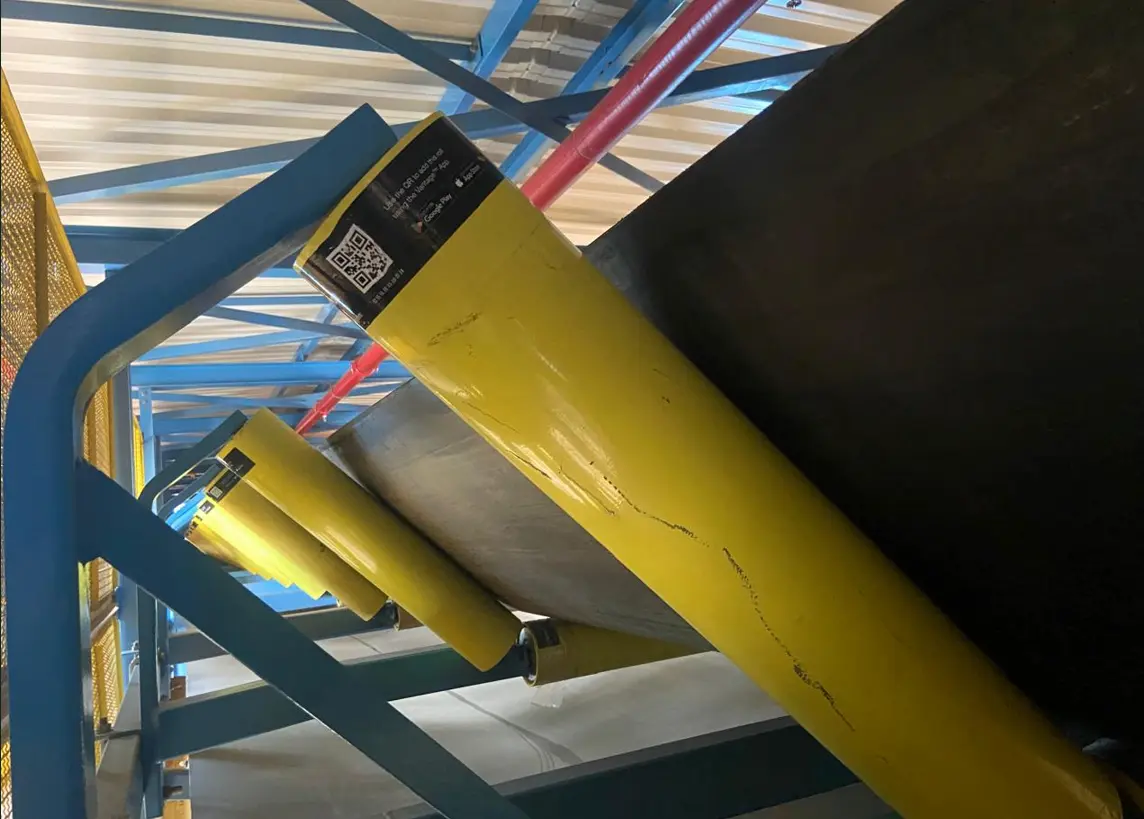
Among the implemented solutions is a smart sensing system for wood chip conveyor belt rollers, considered pioneering in the segment. Currently, the unit has approximately 2,500 smart rollers installed, capable of continuously monitoring parameters such as equipment temperature, vibration, and rotation.
The sensors operate online and wirelessly, utilizing LoRaWAN technology, a long-range, low-power communication protocol. Information is transmitted in real time to supervision and analysis platforms, capable of sending signals up to 3km away without the need for repeaters, which allows technical teams to quickly identify any abnormal behavior.
Integrated Strategy
"With the advancement of IoT technologies and Industry 4.0 concepts, it has become possible to integrate smart sensors capable of collecting real-time data on various operational conditions. This way, sensors are no longer just measurement instruments but become part of an integrated strategy for predictive maintenance, reliability, and operational optimization," explains Anderson Cavessana, ºÚ°µ±¬ÁÏÍø's Reliability Manager.
Roller monitoring plays an important role in ensuring continuous industrial operation, as conveyor belts are responsible for moving the wood chips used in pulp production. In cases of equipment failure, there is a real risk of fire and production shutdowns for extended periods.
"One of the main failure modes in pulp mills is fires on wood chip conveyor belts caused by roller failures. When these pathways are blocked, all pulp production is interrupted, and the effects can spread for weeks," says Cavessana.
Digitalization at a Historic Plant
In addition to smart rollers, the unit is also developing a proof of concept for monitoring electrical connections in industrial motors. The system uses sensors capable of real-time monitoring of the temperature inside motor connection boxes, even with the equipment sealed. The technology was developed internally after studies identified a lack of market solutions that met the unit's operational needs.
One of the main challenges of digital transformation in older industrial plants is adapting structures designed before the era of real-time connectivity. In this context, wireless technologies have enabled the implementation of smart solutions with less need for physical infrastructure, reducing costs and accelerating industrial modernization. On Industry Day, celebrated on May 25th, the projects developed at the Aracruz unit demonstrate how innovation, digitalization, and fault prevention are transforming traditional industrial operations into increasingly updated and efficient environments.